Khapli Wheat (Emmer Wheat): Health Benefits, Low Glycemic Index & Nutrition Guide
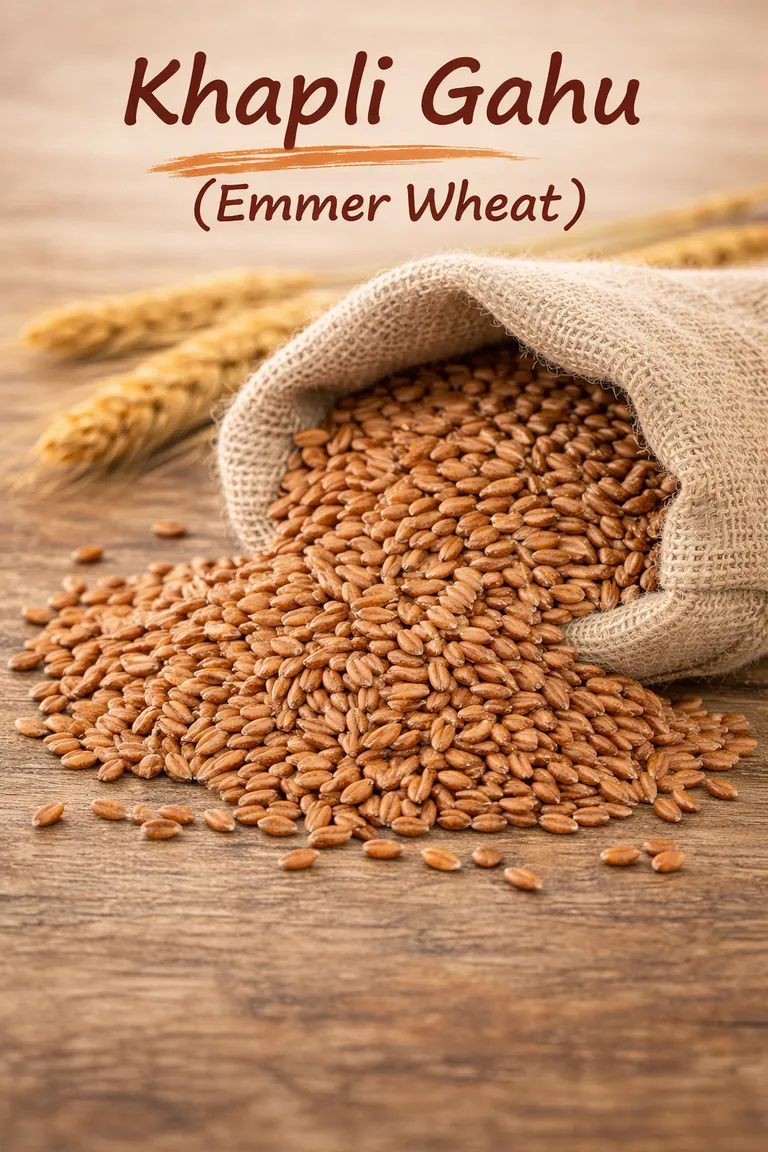
- Low Glycemic Index (GI 40–45): Releases glucose slowly into the bloodstream, making it ideal for clinical diabetes and insulin resistance management.
- Easily Digestible Tetraploid Gluten: Lacks the complex D-chromosome glutenin of hybrid wheat, significantly reducing bloating and digestive discomfort.
- High Natural Dietary Fiber (10–12%): Promotes optimal gut microbiota, assists in natural weight management, and aids cardiovascular lipid control.
- Khandesh Black Soil Purity: Preserved and cultivated naturally by Shetimay farmer collectives in Dhule, Maharashtra without genetic hybridization.
1. What is Khapli (Emmer) Wheat? Ancient Origin & Heritage
Khapli wheat, scientifically classified as Triticum dicoccum and internationally known as Emmer wheat, is one of the earliest domesticated crops in agricultural history. Cultivated for over 10,000 years since the dawn of the Fertile Crescent civilization, Khapli was the dietary backbone of Vedic India and traditional Ayurvedic wellness systems.
Unlike modern dwarf bread wheat (Triticum aestivum), which underwent heavy genetic alteration and cross-hybridization during the 1960s Green Revolution, Khapli wheat has remained an unaltered ancient grain. Genetically, modern wheat is hexaploid (carrying 6 sets of chromosomes, including the D-genome associated with high-elasticity glutenin), whereas Khapli is a tetraploid grain (AABB genome), completely lacking the D-genome.
In Maharashtra, particularly in the deep black cotton soils of Khandesh (Dhule, Nandurbar, and Jalgaon), Shetimay Farmer Producer Company clusters cultivate this authentic heritage grain with minimal synthetic inputs. You can explore our direct farm supply on our Available Crops Catalogue.
Key Structural Characteristic
Khapli wheat is a hulled grain (dicoccum). Its kernel is protected by two tight outer glumes (hulls) during growth, naturally safeguarding the grain from environmental pollutants, pests, and mold while retaining extraordinary mineral and fiber density.
2. Low Glycemic Index (GI 40–45) & Diabetes Management
For individuals managing Type-2 diabetes or pre-diabetes, the primary dietary objective is avoiding sharp post-meal blood glucose spikes. Modern commercial wheat has a high Glycemic Index ranging between 65 and 75, causing rapid enzymatic breakdown of starch into free glucose.
According to clinical nutritional evaluations and the Indian Food Composition Tables (IFCT) published by the ICMR-National Institute of Nutrition (NIN), whole-grain Khapli wheat registers a remarkably low Glycemic Index of 40 to 45. The tightly bound starch structure and high proportion of soluble arabinoxylans slow down carbohydrate digestion in the small intestine, resulting in gradual, sustained glucose absorption and stable insulin sensitivity.
3. Easily Digestible Tetraploid Gluten Structure
Millions of people today suffer from non-celiac wheat sensitivity, chronic bloating, heaviness, and lethargy after consuming modern hybrid wheat chapattis. Modern wheat was selectively bred for high gluten elasticity to serve industrial automated baking. This resulted in dense glutenin polymers that human digestive enzymes struggle to hydrolyze completely.
Because Khapli wheat is a tetraploid grain without the D-chromosome, its gluten molecules are shorter, less elastic, and significantly more water-soluble. When digested, it breaks down smoothly without triggering systemic gut inflammation. (Note: While ideal for wheat-sensitive individuals, Khapli still contains natural gluten and is not suitable for clinical Celiac disease patients).
4. Nutritional Comparison: Khapli vs. Modern Wheat
Below is a factual nutritional comparison per 100 grams based on food composition standards:
| Nutritional Parameter | Heritage Khapli Wheat (Emmer) | Modern Hybrid Wheat (Normal) |
|---|---|---|
| Glycemic Index (GI) | Low (40 – 45) • Stable glucose release | High (65 – 75) • Sharp insulin surge |
| Dietary Fiber | 10 – 12% (High natural prebiotic fiber) | 4 – 6% (Low to moderate) |
| Protein Content | 12 – 14.5% (Rich in essential amino acids) | 10 – 11.5% (Commercial standard) |
| Gluten Structure | Simpler tetraploid gluten (Gentle on stomach) | Dense hexaploid gluten (Heavy on digestion) |
| Micronutrients | Rich in Magnesium, Iron, Zinc & Lutein | Moderate levels; often lost in milling |
| Genetic Modification | 100% Non-hybrid ancient lineage | Heavily hybridized dwarf varieties |
5. How to Knead & Cook Soft Khapli Rotis
Because authentic Khapli flour has lower gluten elasticity than hybrid wheat, it requires a slightly different traditional kneading technique:
- Lukewarm Water Kneading: Use warm water to knead the dough. This relaxes the grain starches and produces a smooth dough ball.
- Resting Period: Allow the dough to rest covered under a damp cloth for 15 to 20 minutes before rolling.
- Gentle Rolling: Roll the rotis with light, uniform pressure without excessive dry flour dusting.
- Medium-Hot Iron Tawa: Bake on a medium-hot iron tawa, flipping twice until golden brown spots appear. The result is aromatic, nutty, and soft rotis.
6. Scientific Studies & Authority Endorsements
The health benefits and agronomic resilience of Khapli wheat are supported by leading scientific agricultural and health institutions:
- ICMR-National Institute of Nutrition (NIN): Dietary guidelines recommend incorporating traditional unpolished grains to combat India's metabolic syndrome and diabetes burden.
- Indian Council of Agricultural Research (ICAR): Research highlights that Triticum dicoccum possesses exceptional genetic resistance against black and brown rusts (Puccinia fungi), reducing chemical dependency.
- Food Safety & Standards Authority of India (FSSAI): Sets rigorous purity standards ensuring whole-grain flour preserves natural bran and germ fractions.
Looking for Pure Farm-Direct Khapli Wheat?
Shetimay Farmer Producer Company supplies 100% authentic Khapli wheat in 50kg bags and bulk commercial truckloads for flour mills, retail brands, and conscious families across India. Learn more about our Wholesale Sourcing for Mills or read our Khapli Farming Guide.
Frequently Asked Questions (FAQ)
Is Khapli wheat suitable for diabetic patients?
Yes. Khapli wheat has a low Glycemic Index (40–45) compared to regular wheat (65–75). According to ICMR-NIN data, its complex starches release glucose slowly, preventing post-meal blood sugar surges.
Is Khapli wheat completely gluten-free?
No, Khapli wheat contains natural ancient gluten, but its chemical structure is tetraploid and easily broken down by digestive enzymes. People with non-celiac sensitivity digest it comfortably.
How do you make soft rotis using Khapli flour?
Knead the flour with lukewarm water, allow the dough to rest for 15–20 minutes to absorb moisture, roll gently with light pressure, and bake on a medium-hot iron tawa.
Have Questions or Looking for Bulk Supply / Contract Farming?
Speak directly with our agronomy and commercial trade desk via WhatsApp or phone.